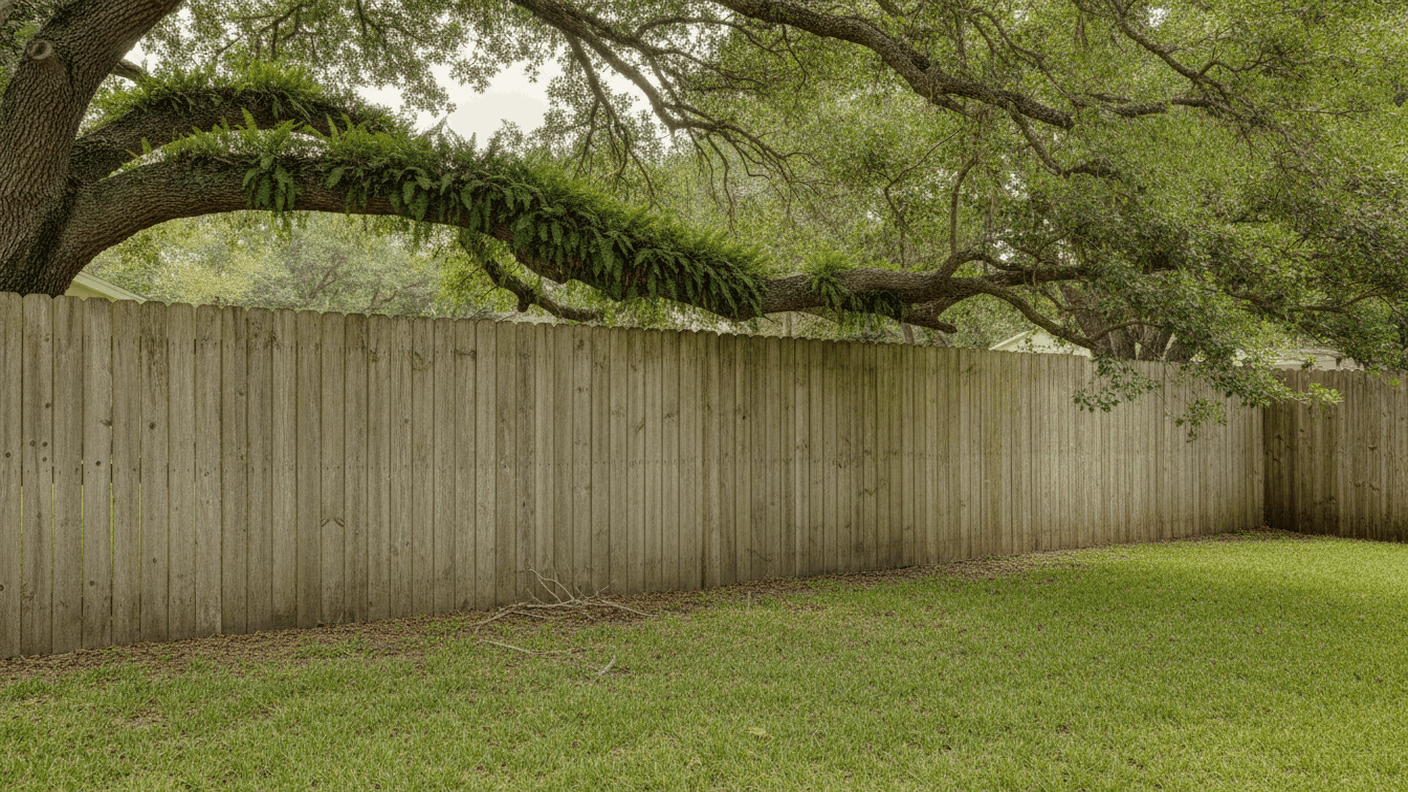
In Florida, the person bothered by overhanging tree branches generally pays to cut them. You may trim branches and roots back to your property line at your expense. The tree’s owner usually isn’t responsible while the growth remains healthy. Dead branches can change that answer.
One thing before the details: this is general legal information, not legal advice. If a dispute, demand letter, or damage claim is already in play, talk to a Florida attorney.
Who is responsible for cutting overhanging tree branches in Florida?
Florida generally makes the affected neighbor responsible for trimming healthy overhanging growth. Your trimming right extends only to the property line. You also bear the cost of work performed on your side.
The University of Florida’s property-law handbook explains this through a case called Gallo v. Heller, decided by Florida’s Third District Court of Appeal in 1987. As quoted in the handbook, a landowner isn’t liable to outsiders for nuisance caused by naturally growing trees and vegetation.
The same case describes the neighbor’s remedy as self-help. The affected neighbor may trim encroaching branches and roots at their own expense. The cut may extend up to the property line.
Picture two homes separated by a fence in Seminole Heights. An oak stands entirely inside one yard. Several healthy limbs extend across the fence into the second yard. Under Florida’s general rule, the second homeowner may arrange trimming on their side. The oak’s owner doesn’t automatically become responsible for that trimming bill.
This distinction matters during ordinary neighbor conversations. Ownership of the trunk doesn’t always determine who pays for routine trimming. The location of the unwanted growth and its condition matter more.
A crew shouldn’t cross onto the neighbor’s property without permission. It also shouldn’t cut beyond the customer’s side of the line. The crews we send can scope tree trimming from your property while preserving that boundary.
Can I make my neighbor trim their tree?
Usually not, as long as the growth is healthy. Florida’s self-help rule doesn’t require your neighbor to trim healthy growth. It lets you cut encroaching branches or roots from your side, and you normally pay for that work yourself.
That answer changes when the disputed growth is dead. The University of Florida handbook says a tree owner may be responsible for dead branches. It also says that owner could be liable for damage those branches cause.
Condition matters more than frustration here. A branch blocking sunlight isn’t necessarily a dead branch. An ISA-certified arborist consultation can document the tree’s actual condition.
A calm conversation still helps before anyone arrives with cutting equipment. Show your neighbor which branches concern you. Explain that work will remain on your side. Discuss access only if access is genuinely needed.
Put any permission in writing when work requires cooperation. Written agreement becomes especially important when the trunk touches the boundary. It also creates a clear record of the planned scope.
What if the branches or roots are already damaging my property?
Healthy branches and roots generally remain subject to Florida’s self-help rule. The handbook says the tree’s owner isn’t liable for damage caused by healthy growth. The affected neighbor may trim that growth to the property line.
A 2010 case called Scott v. McCarty addressed this situation. A homeowner sued over damage allegedly caused by a neighbor’s branches and roots. Florida’s Fourth District Court of Appeal affirmed the lawsuit’s dismissal.
That decision reinforces the practical starting point for healthy growth: the remedy is trimming from your side, not suing. It doesn’t predict the result of every dispute involving different facts.
Dead growth requires a different analysis. The handbook says the owner may be responsible for dead branches. A documented hazard can also affect how the situation is understood.
Photographs can preserve the visible condition before trimming begins. Keep written messages about the tree and requested work. An arborist can assess whether the concern involves healthy growth, deadwood, or broader decline.
Our guide to signs that a tree may be hazardous explains what deserves professional attention. It doesn’t decide responsibility between neighbors. That decision belongs with qualified legal counsel when a real dispute develops.
Can I cut roots that are lifting my driveway or patio?
Florida’s self-help rule includes encroaching roots up to the property line. However, cutting major roots can weaken the tree beside your home. Legal permission and a good practical outcome aren’t always the same thing.
Balzer v. Ryan reached Florida’s First District Court of Appeal in 2018. The case concerned root cutting that damaged a neighboring tree. According to the University of Florida handbook, the cutting undermined the tree’s structural integrity. It also increased the risk that the tree might eventually fall.
The court found that the tree owner had no cause of action. That ruling describes the outcome of that particular case. It isn’t a promise that every root-cutting method is consequence-free.
A large tree can affect both properties after its roots are disturbed. An arborist should examine the tree before significant roots are cut. That assessment can help define a narrower scope for the crew.
The handbook also leaves one method unresolved. It isn’t clear whether applying herbicide to encroaching growth qualifies as lawful self-help. Herbicide may move through the plant and kill it entirely. Don’t treat that open question as settled permission.
Root conflicts sometimes involve more than patios or driveways. Roots can enter sewer lines through defects or openings, and our tree roots in sewer line guide walks through that problem. Tree work doesn’t confirm or repair a defective sewer lateral. A licensed plumbing contractor should inspect the pipe itself.
What if the tree trunk sits on the property line?
A true boundary-line tree should not be removed without written agreement. Florida law treats this situation differently from branches crossing the line. The trunk’s location changes the problem.
The University of Florida handbook discusses Elowsky v. Gulf Power Co. That 1965 case involved removing a boundary tree without the adjoining owner’s consent. The court recognized possible liability for reduced property value and lost ornamental value.
The practical rule is simple: confirm where the trunk sits first. A fence isn’t always proof of the legal property line. Don’t touch a shared trunk based only on where the branches hang.
Get both owners’ agreement before arranging removal. The agreement should identify the tree and approved work. A Florida attorney can help when ownership or consent remains disputed.
Tree removal can also involve local requirements separate from neighbor law. Tree rules differ across Tampa Bay, and the property address determines the jurisdiction. Our Tampa tree removal permit guide covers that process without replacing confirmation from the appropriate jurisdiction.
When removal is approved and properly scoped, we can connect homeowners with insured tree removal crews. Tampa Tree Pro remains the referral service. The matched crew performs and quotes the work.
What happens if the whole tree falls?
The handbook reports different responsibility rules for dead and live fallen trees. It says the tree’s owner is responsible when a dead tree damages adjoining property. It says the damaged adjoining owner is responsible when a live tree falls.
That statement requires an important warning from the same handbook. There is no Florida case law discussing this live-versus-dead distinction. The rule comes from Florida Jurisprudence, which isn’t binding authority. A court may disregard it when deciding a case.
The handbook also says one could argue a dead tree’s failure is foreseeable. That argument may support a duty to remove the dead tree. It becomes especially relevant when failure could occur during a storm.
Those points don’t decide what happens with a particular tree. Condition, notice, location, and other facts may matter. A Florida attorney should evaluate an actual demand or claim.
Our guide to what happens when a tree falls on a house covers the aftermath. It also keeps that separate scenario from ordinary overhanging branches.
Didn’t Florida just change this law?
No. The proposed 2025 Fallen Tree Act has not become law. Florida’s existing common-law framework therefore remains in place.
Senate Bill 724 would have made property owners liable when their trees or shrubs fell onto another property. The Florida Senate’s bill page shows that proposal died in the Banking and Insurance Committee. Its last action occurred on June 16, 2025.
The identical House companion, House Bill 599, died that same day. So the rules described by the University of Florida handbook still hold.
Future legislation could address the subject differently. Homeowners dealing with an active dispute should confirm current law with a Florida attorney.
What should you do before anyone cuts anything?
Start by confirming the property line and documenting the tree’s condition. Then speak with your neighbor before scheduling work. A short conversation can expose disagreements before a crew arrives.
Use this order:
- Photograph the branches, roots, trunk, fence, and nearby structures.
- Confirm that the proposed cuts stay on your property.
- Ask an arborist whether the growth is healthy, dead, or hazardous.
- Share the intended scope with your neighbor in writing.
- Get written agreement before touching a boundary-line tree.
- Keep removal and permit questions separate from routine trimming.
- Send any legal demand or disputed damage claim to an attorney.
A crew working from your side can keep the scope clear. Proper pruning cuts also avoid unnecessary damage to the remaining tree. That matters when the same canopy still shades both yards.
An ISA-certified arborist can provide a written condition assessment when danger is suspected. That record documents the tree rather than deciding the legal dispute. Homeowners needing local help can request tree service in Tampa through our network.
Removal presents a separate decision. Confirm neighbor consent when ownership is shared or disputed. Then review local permit requirements before scheduling the work.
Frequently asked questions
Can I trim my neighbor’s tree branches in Florida?
Yes, you may generally trim encroaching branches to your property line. The University of Florida handbook says you bear that expense. Don’t cut beyond the line or enter the neighboring property without permission.
Does my neighbor have to pay for trimming overhanging branches?
Usually not when the branches are healthy. Florida’s self-help rule places ordinary trimming costs on the affected neighbor. Dead branches may create a different responsibility question.
Can I cut roots growing onto my property?
Yes, Florida’s self-help rule includes encroaching roots up to the property line. Significant root cutting can weaken the tree, however. An arborist should assess major roots before work begins.
Can I use herbicide on roots crossing the property line?
Florida law doesn’t clearly answer that question. The University of Florida handbook identifies herbicide as an unresolved self-help method. It may travel through and kill the entire plant.
Can one neighbor remove a tree growing on the boundary?
Not safely without the other neighbor’s written consent. The handbook says removing a boundary tree without authorization may create liability. Confirm the line and secure agreement before removal.
Are dead branches treated differently from healthy branches?
Yes. The handbook says tree owners may be responsible for dead branches. It also says they could be liable for damage those branches cause.
Can Tampa Tree Pro help with overhanging branches?
Yes. Tampa Tree Pro connects homeowners with insured crews and ISA-certified arborists across Tampa Bay. The crews we send can assess work from your side of the property line. Contact Tampa Tree Pro to request a connection.