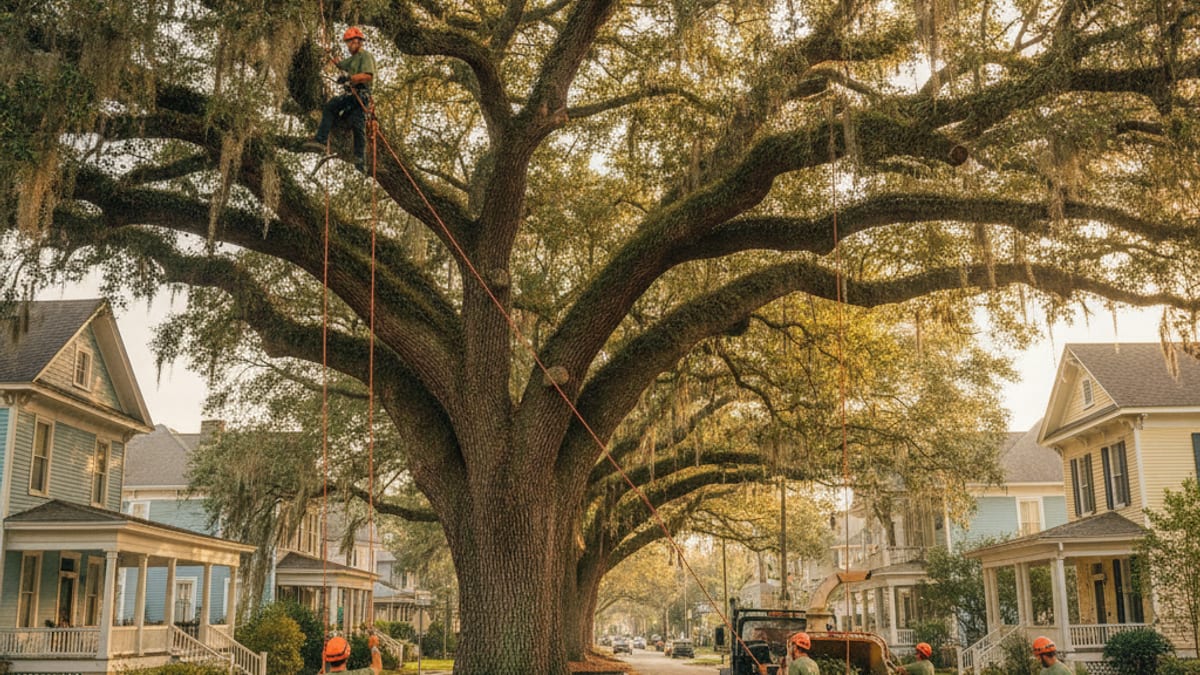
Drive through Hyde Park, Seminole Heights, or the older streets of St. Petersburg and you’ll see them: live oaks with trunks wider than a dinner table, canopies that shade half a lot, limbs that have been growing since before the neighborhood existed. Those trees aren’t just landscaping. In much of Tampa Bay, once an oak crosses a certain size, it becomes a protected “grand tree” or “specimen tree,” and that changes what you’re legally allowed to do to it.
Homeowners find this out the hard way, usually when they call a crew to remove a leaning limb or clear space for an addition and get told the tree needs a permit first. Here’s what actually triggers protection, what it means for your project, and where the rules get more restrictive than most people expect.
What makes a tree “grand” in the eyes of the city
Tampa, St. Petersburg, and Hillsborough and Pinellas counties each maintain their own tree protection ordinances, and the thresholds vary by municipality. In general, though, the pattern is the same: once a native canopy species like live oak, southern magnolia, or bald cypress reaches a trunk diameter somewhere in the 30 to 50 inch range measured at breast height, it crosses into protected territory. Some cities set the bar lower for particularly valuable species and higher for common ones.
The measurement matters more than the tree’s age or how it looks. A oak that’s leaning, hollow in one section, or dropping limbs can still qualify as a grand tree if the trunk diameter clears the threshold. Size, not health, is usually what triggers the paperwork.
Because the exact diameter cutoff differs between Tampa city limits, unincorporated Hillsborough County, and Pinellas municipalities, the only reliable way to know where your tree stands is to check with the local urban forestry or natural resources office before you plan any work. Don’t assume a tree that was fine to trim at your last house follows the same rules here.
What protection actually restricts
Grand tree status doesn’t mean the tree can never be touched. It means certain actions require a permit, and some require a licensed arborist’s assessment before the city will approve them. The activities that typically trigger review include:
Removing the tree entirely, even if it’s on your own private lot. Significant pruning that removes more than a set percentage of the live canopy in a single job. Grading, trenching, or construction within the tree’s root protection zone, which usually extends out to the edge of the canopy or further. Building a structure, driveway, or pool close enough that root disturbance is likely.
This last point trips up more homeowners than tree removal itself. A grand oak doesn’t have to be in the direct footprint of a new addition to fall under the ordinance. If heavy equipment or excavation happens within its root zone, that alone can require a permit and a mitigation plan, even if not a single branch gets cut.
Why the rules exist
Live oaks and other legacy canopy trees take decades, sometimes a century or more, to reach specimen size. They anchor stormwater absorption, cut summer cooling costs for entire blocks, and give older Tampa Bay neighborhoods their character. A tree that size can’t be replaced by planting a sapling. The ordinances exist because once it’s gone, the shade, the wildlife habitat, and the property value bump it provided are gone too, for a generation or more.
That’s also why most jurisdictions require mitigation when a grand tree does come down legally, whether that’s planting a set number of replacement trees or paying into a tree fund. It’s worth factoring that cost into any project that might affect a protected oak on your lot.
Getting a permit doesn’t mean getting denied
A lot of homeowners assume “protected” means “off limits,” and that stops them from even applying. In practice, cities approve grand tree permits regularly, especially when the tree poses a genuine safety risk, has significant disease or structural damage, or when a builder submits a reasonable mitigation plan. What the review process actually does is force a documented case for why the work is necessary, so the city isn’t losing legacy canopy to convenience removals or landscaping preferences.
If your oak has visible decay, a split trunk, or dead scaffold limbs over the roof, that’s exactly the kind of documentation that speeds up approval. A written arborist consultation report describing the tree’s condition carries real weight with permitting staff, and it’s usually the first thing they’ll ask for anyway.
What to do before you call anyone with a chainsaw
If you’re planning any project near a large oak or magnolia in Tampa, Brandon, Riverview, Clearwater, or St. Petersburg, start with these steps instead of scheduling removal first.
Measure the trunk diameter at roughly 4.5 feet off the ground, or have a professional do it, so you know where you stand before you call the permitting office. Contact your city or county’s urban forestry department directly. Requirements differ enough between Tampa city limits and unincorporated Hillsborough that a neighbor’s experience two miles away may not apply to you. Get a written assessment if the tree shows any signs of decline, since that documentation often determines whether a permit is approved and how quickly.
If removal turns out to be necessary and approved, work with a crew that has handled permitted grand tree removals before. Large specimen oaks near structures, power lines, or property lines usually call for crane-assisted removal to bring the tree down in sections without damage to what’s underneath, and a crew unfamiliar with the permit requirements can create delays or compliance problems you don’t want to deal with mid-project.
Pruning a grand tree without triggering a violation
Regular maintenance pruning is usually allowed without a permit, as long as it stays under the canopy-removal percentage the ordinance sets. The line gets crossed when a homeowner asks for aggressive thinning or topping to open up a view or reduce leaf litter. Topping a protected oak is one of the fastest ways to both damage the tree’s long-term health and land in violation territory, since it removes far more live canopy than routine maintenance.
If you’re dealing with storm damage, deadwood, or limbs that overhang the roof, structural pruning done correctly addresses the safety issue while staying within the canopy limits most ordinances allow. It’s worth asking the crew directly whether the scope of work they’re proposing falls under routine maintenance or would require a permit before they start cutting.
What happens if you skip the permit
Removing or significantly damaging a protected grand tree without going through the permit process can carry real consequences beyond a strongly worded letter from code enforcement. Fines for unpermitted removal of a protected tree can run into the thousands of dollars per tree in some Tampa Bay municipalities, and the city can still require replacement mitigation on top of any penalty, meaning you end up paying twice, once in fines and again in required replacement plantings.
This comes up more than you’d expect with new homeowners who inherit a property, don’t realize a tree on it is protected, and remove it during a routine landscaping cleanup before ever checking. Ignorance of the ordinance isn’t a defense the city typically accepts, which is exactly why it’s worth having any large, old canopy tree measured and checked against local rules as one of the first things you do after buying a property with mature trees on it, well before you schedule any tree work at all.
If you’re selling a property with a grand tree on it, disclosing its protected status to a buyer, or at minimum making sure they know to check before planning renovations, can save everyone a headache down the line. Real estate transactions involving older Tampa Bay neighborhoods with legacy oaks come with this consideration more often than either party expects going in.
Working with contractors and landscapers who understand the rules
Not every landscaping company or general tree crew is familiar with the permitting requirements in a given city, especially crews that primarily work outside the specific municipality where your property sits. It’s a reasonable question to ask directly before hiring anyone for work near a large, old tree: have they handled grand tree permits in this specific city or county before, and do they know the process for requesting root protection zone approval if your project involves excavation nearby.
A crew that’s unfamiliar with the local ordinance might do the work correctly from a horticultural standpoint and still leave you facing a violation, because the permit step happened, or didn’t happen, incorrectly on paper. That’s a frustrating and entirely avoidable outcome for something that should have been handled up front.
The bottom line for Tampa Bay homeowners
A grand or specimen designation isn’t a punishment. It’s the city recognizing that the oak in your yard took longer to grow than most of the houses around it will stand. If you’re building, renovating, or just dealing with a tree that’s showing its age, get the size measured, call the local forestry office, and document the tree’s condition before you make any decisions. When the work is genuinely needed, insured local crews familiar with grand tree permitting can get you through the process without unnecessary delays, and connecting with the right one from the start saves you from redoing paperwork later.